
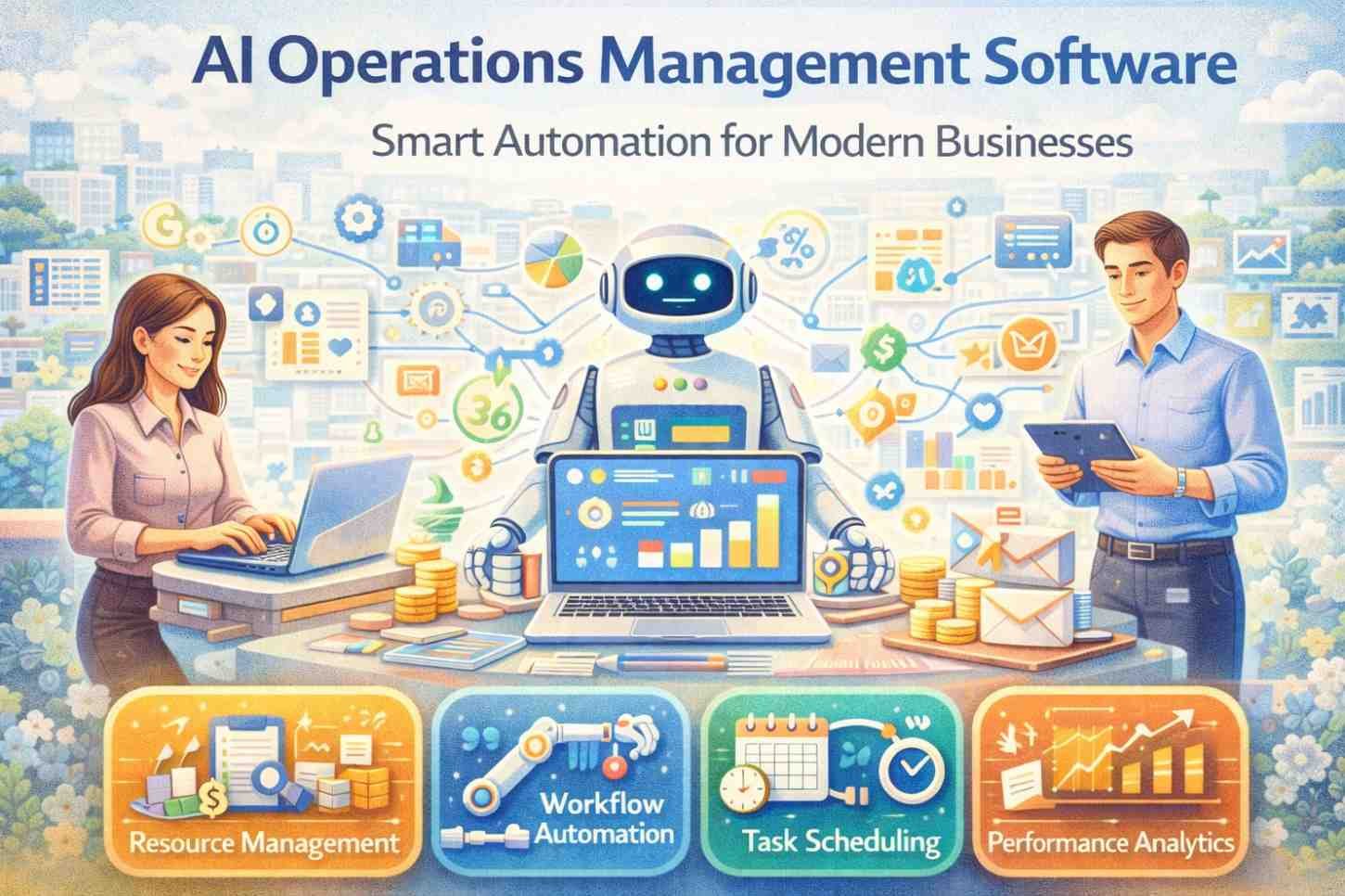
In today’s fast-evolving digital economy, businesses are under constant pressure to operate faster, smarter, and more efficiently. Traditional operations management systems often struggle to keep up with the growing complexity of modern business environments. Companies must handle large volumes of data, coordinate multiple teams, manage supply chains, and deliver consistent customer experiences.
This is where AI Operations Management Software becomes a powerful solution. By integrating artificial intelligence with operational processes, organizations can automate workflows, analyze data in real time, and improve decision-making across departments.
The demand for AI Operations Management Software has grown rapidly as businesses look for smarter ways to streamline operations and reduce manual workload. AI-powered platforms can monitor business processes, detect inefficiencies, and automatically optimize workflows.
What Is AI Operations Management Software?
AI Operations Management Software is a digital platform that uses artificial intelligence to monitor, automate, and optimize business operations.
These systems combine technologies such as:
- Machine learning
- Predictive analytics
- Workflow automation
- Real-time monitoring
Unlike traditional operations tools, AI Business Operations Software continuously analyzes operational data to identify opportunities for improvement.
Key Functions of AI Operations Management Platforms
- Automating operational workflows
- Monitoring business processes in real time
- Predicting operational risks
- Improving resource allocation
This technology allows companies to operate more efficiently while reducing human error.
Why Modern Businesses Need AI Operations Management
Companies are adopting AI Operations Management Software because it provides several advantages over traditional operations systems.
Increased Operational Efficiency
Automation eliminates repetitive tasks and speeds up workflows.
Data-Driven Decision Making
AI analytics provide insights that help businesses make better strategic decisions.
Cost Reduction
Automated operations reduce labor costs and operational inefficiencies.
Improved Business Scalability
AI tools allow businesses to scale operations without dramatically increasing workforce size.
These benefits make AI Operations Automation Tools essential for modern organizations.
Step-by-Step Guide: How AI Operations Management Software Works
1. Collect Operational Data
AI systems rely on large volumes of data to analyze business performance.
Data sources may include:
- Sales data
- Customer interactions
- Supply chain operations
- Financial transactions
Collecting accurate data ensures reliable AI insights.
2. Analyze Data Using AI Algorithms
Once data is collected, AI algorithms analyze patterns and trends.
These systems can identify:
- Operational bottlenecks
- Inefficient workflows
- Resource allocation problems
This analysis provides valuable insights for improving operations.
3. Automate Business Processes
After identifying inefficiencies, AI Operations Management Software automates repetitive processes.
Examples include:
- Order processing
- Customer support responses
- Inventory management
Automation improves operational efficiency and reduces manual workload.
4. Predict Operational Issues
AI-powered systems can forecast potential operational problems before they occur.
- Supply chain disruptions
- Customer demand fluctuations
- Equipment maintenance needs
Predictive analytics allows businesses to respond proactively.
5. Optimize Resource Allocation
AI systems analyze workforce productivity and resource usage.
- Allocate staff more effectively
- Optimize supply chain logistics
- Reduce operational waste
Efficient resource management improves profitability.
6. Monitor Performance in Real Time
Modern AI Operations Management Platforms provide real-time dashboards.
Managers can:
- Track operational performance
- Monitor workflow efficiency
- Identify improvement opportunities
Real-time monitoring ensures continuous optimization.
7. Continuously Improve Business Processes
AI systems learn from new data and continuously improve operations.
Machine learning algorithms refine predictions and automation strategies over time.
Top AI Operations Management Software Platforms
| Platform | Key Features | Best For |
|---|---|---|
| IBM Watson AIOps | AI analytics, predictive monitoring | Large enterprises |
| ServiceNow AIOps | Workflow automation, incident management | IT operations |
| Splunk ITSI | Real-time analytics, operational insights | Data-driven companies |
| Dynatrace | AI performance monitoring | Application operations |
| Moogsoft | AI incident detection and resolution | IT operations teams |
Key Features of AI Operations Management Software
- AI-Powered Workflow Automation – Reduces manual intervention and speeds up operations.
- Predictive Analytics – Predicts operational issues and suggests solutions.
- Real-Time Monitoring – Dashboards provide instant insights into performance.
- System Integration – Integrates with CRM, ERP, and other business systems.
Benefits of Using AI Operations Management Software
- Improved operational efficiency
- Reduced operational costs
- Better customer experiences
- Enhanced business agility
Common Mistakes to Avoid
- Poor data quality
- Lack of employee training
- Ignoring integration capabilities
Tips for Implementing AI Operations Management Successfully
- Start with high-impact processes
- Train employees on AI tools
- Monitor performance metrics
- Continuously improve operations
Conclusion
Adopting AI Operations Management Software allows businesses to transform their operational strategies and achieve greater efficiency in today’s competitive digital landscape. By combining artificial intelligence, predictive analytics, and workflow automation, organizations can streamline processes, reduce manual workloads, and make faster data-driven decisions.
When implemented correctly, AI Operations Management Software becomes a powerful engine for innovation and scalability, helping modern businesses automate complex processes and stay ahead in a rapidly evolving marketplace.